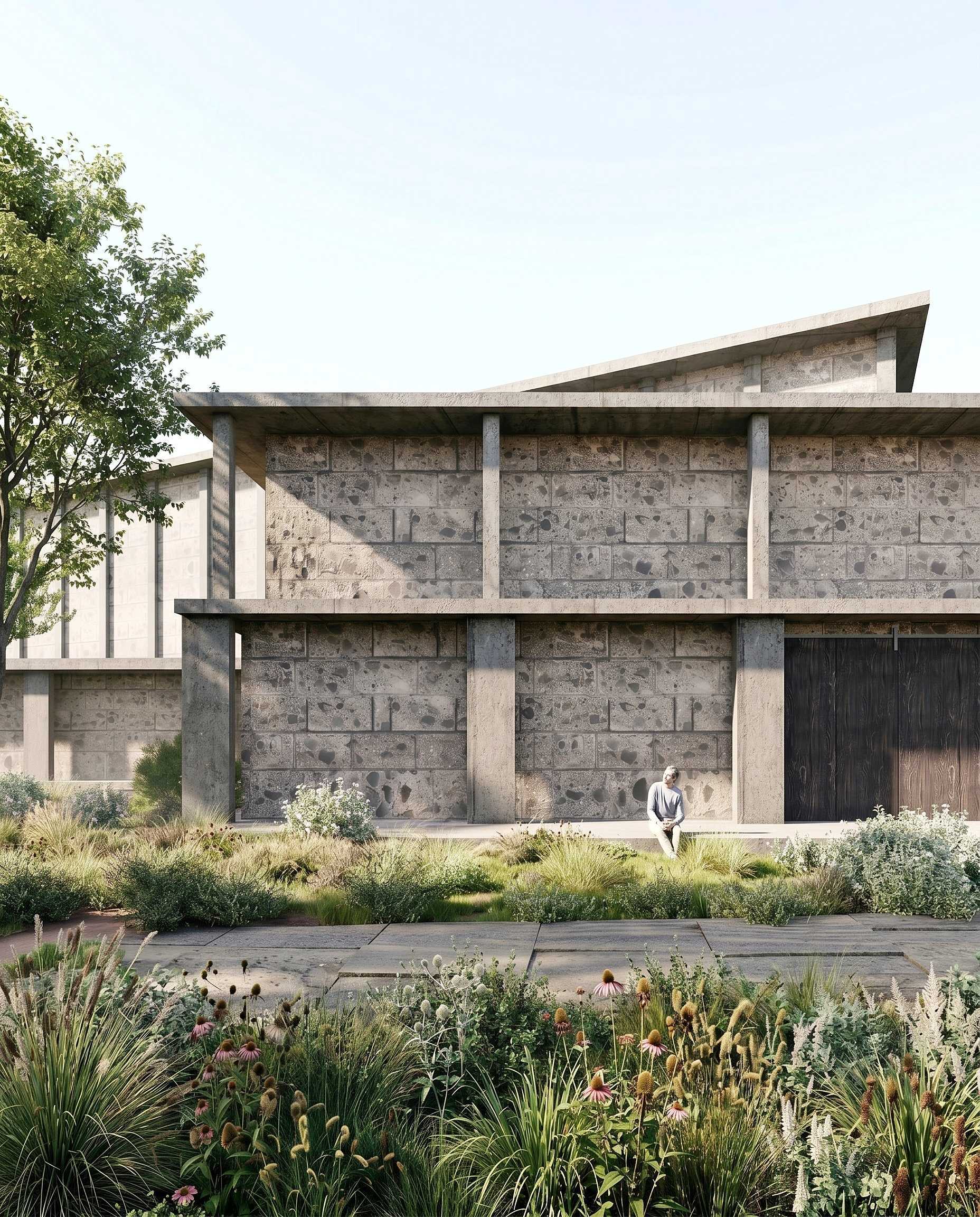
 112_Side entrance
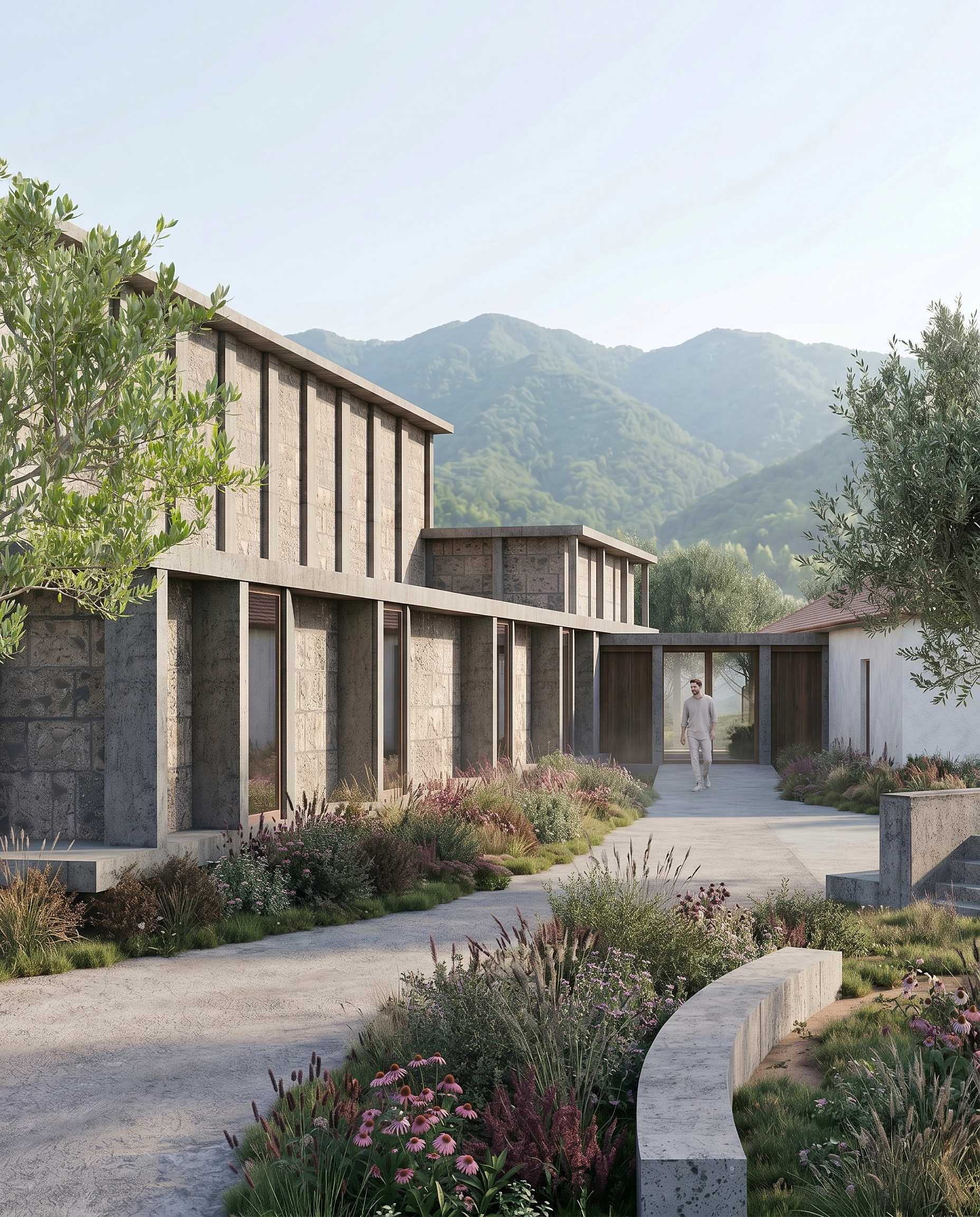
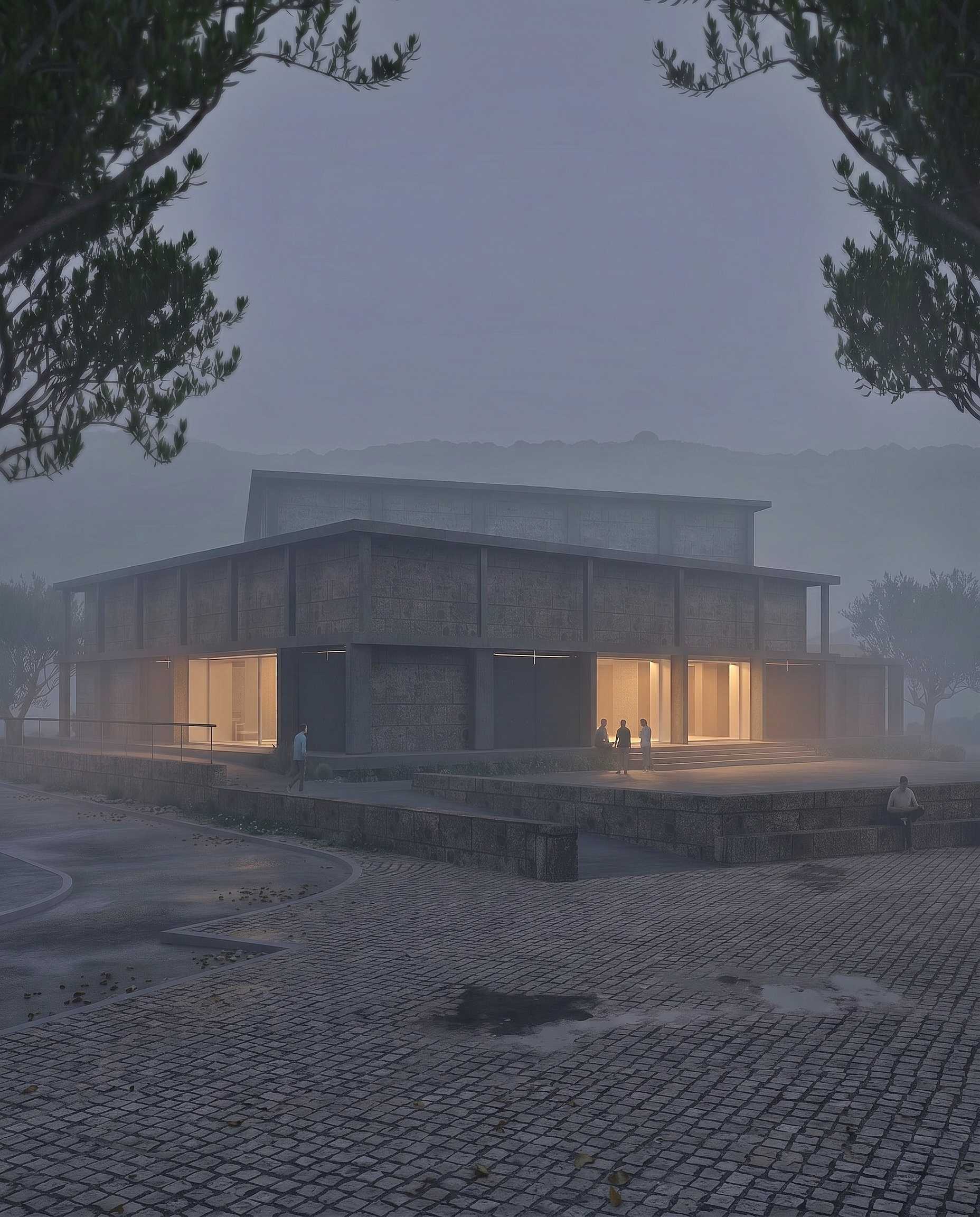
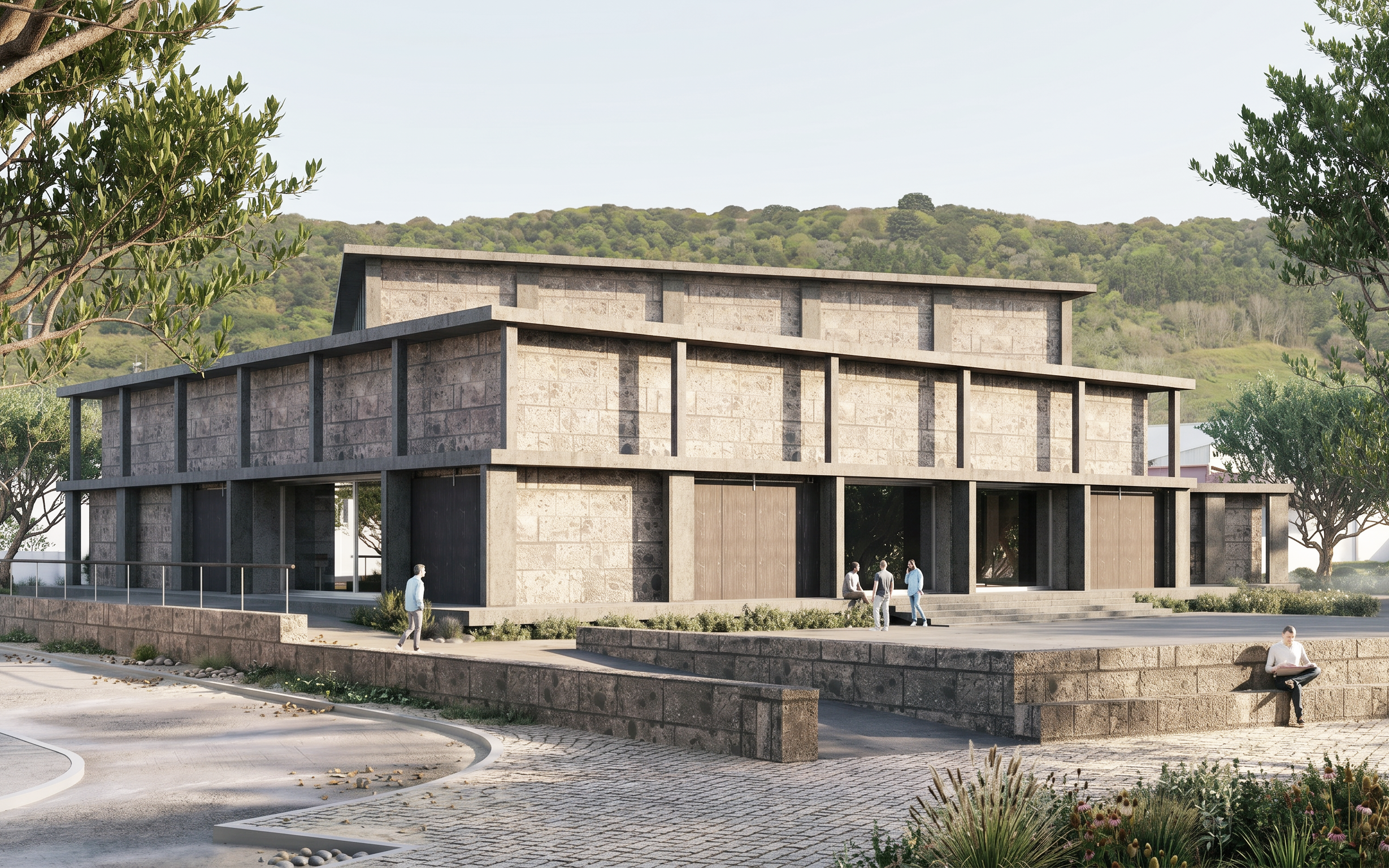 112_Exterior
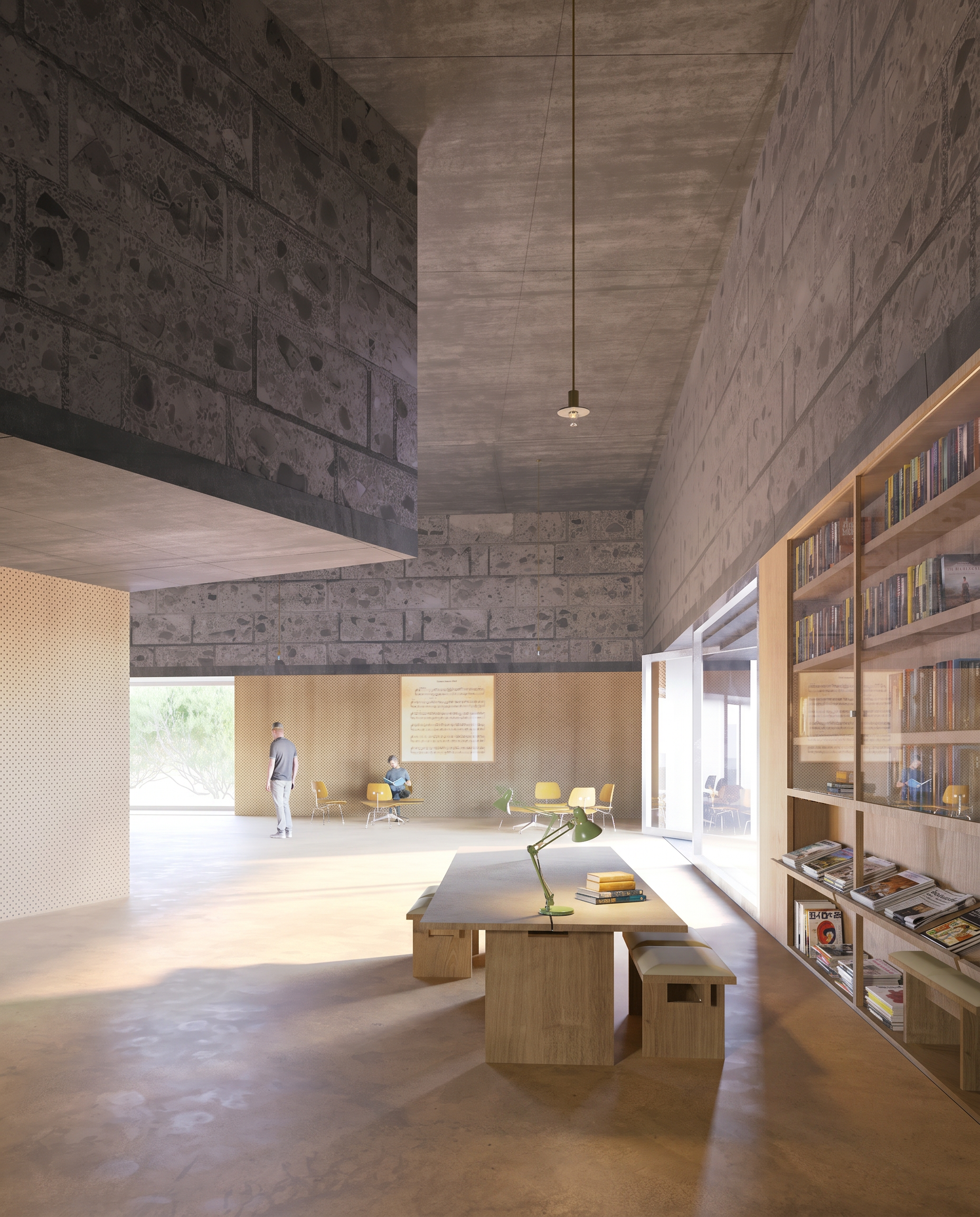 112_Atrium
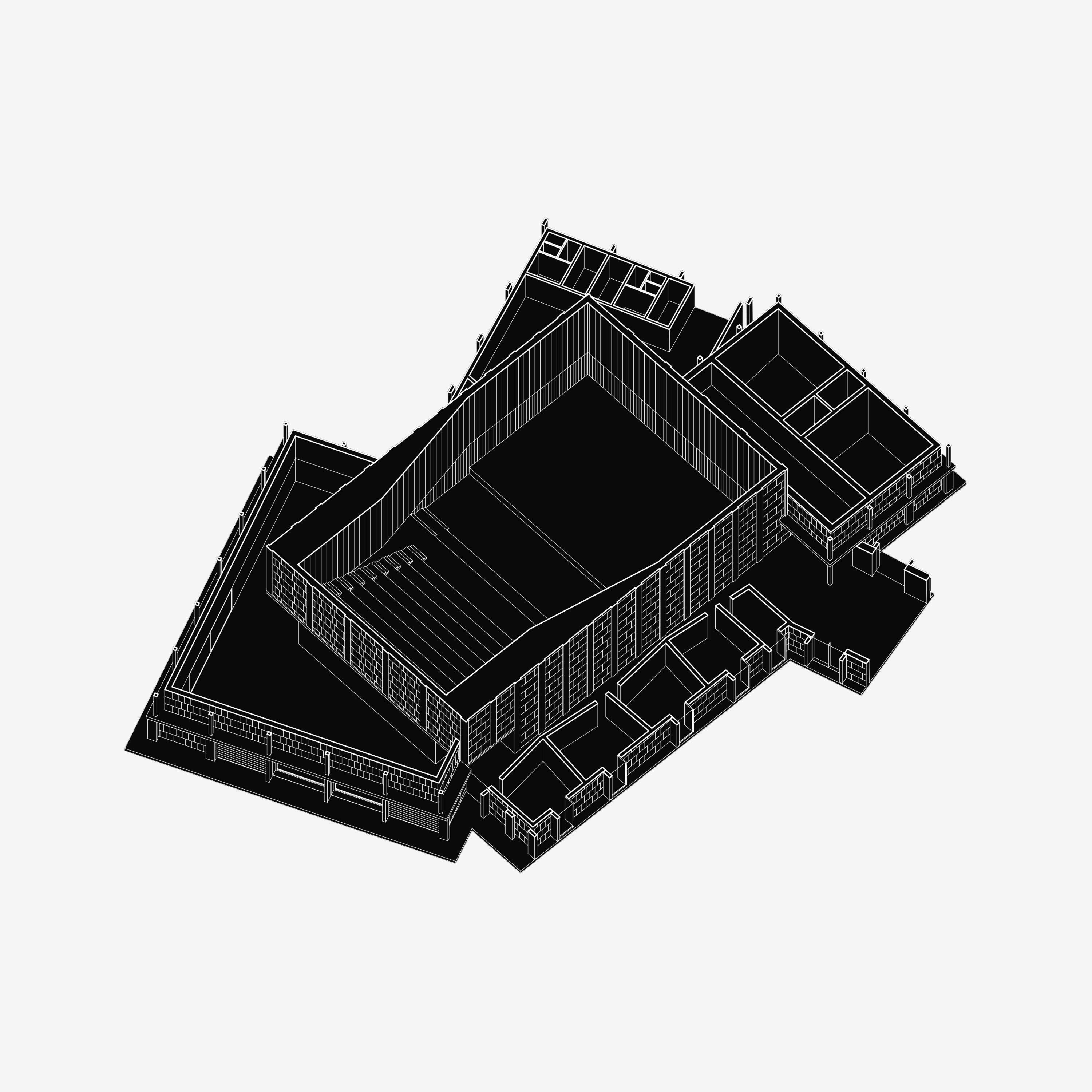
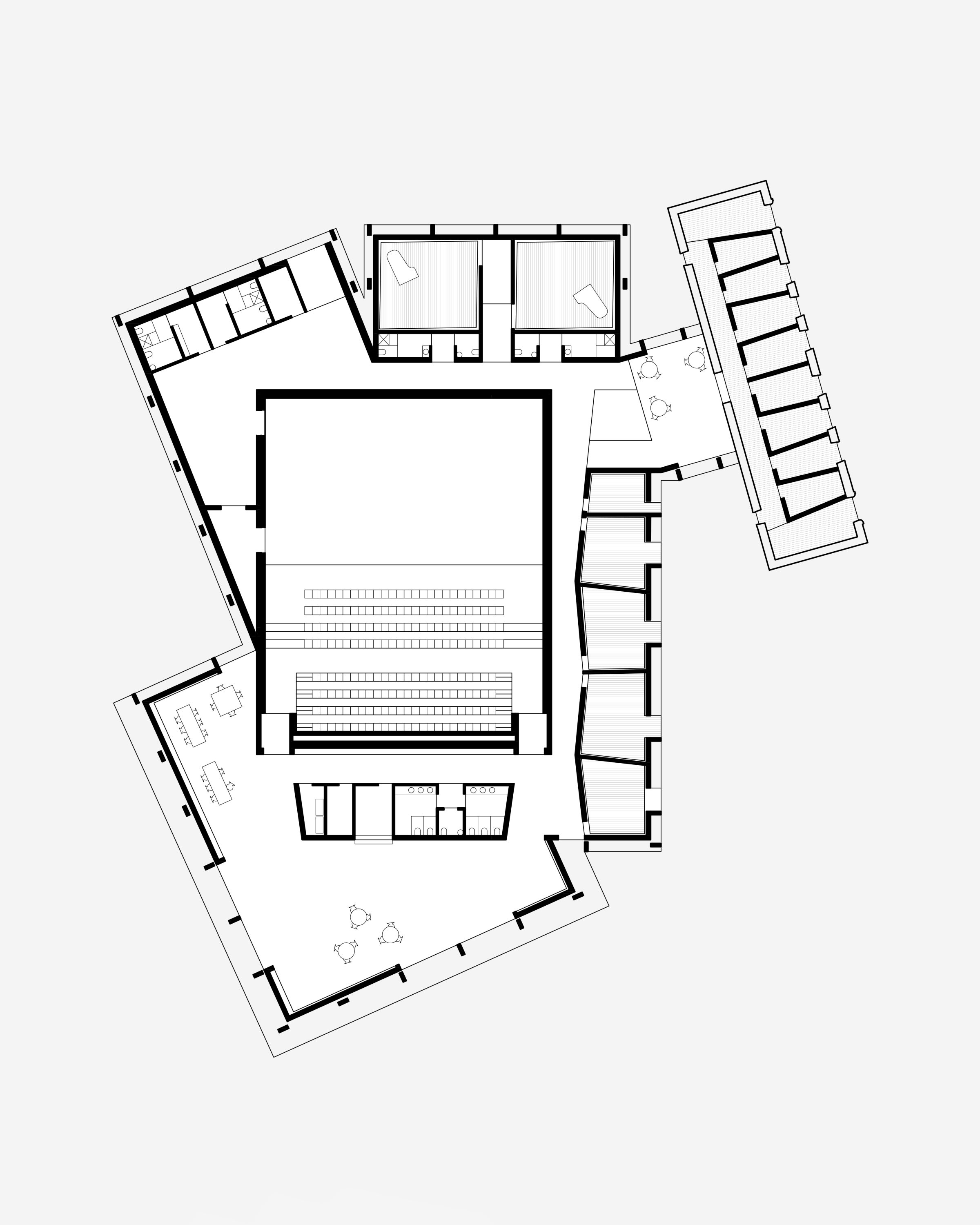 112_Plan
ONTOS
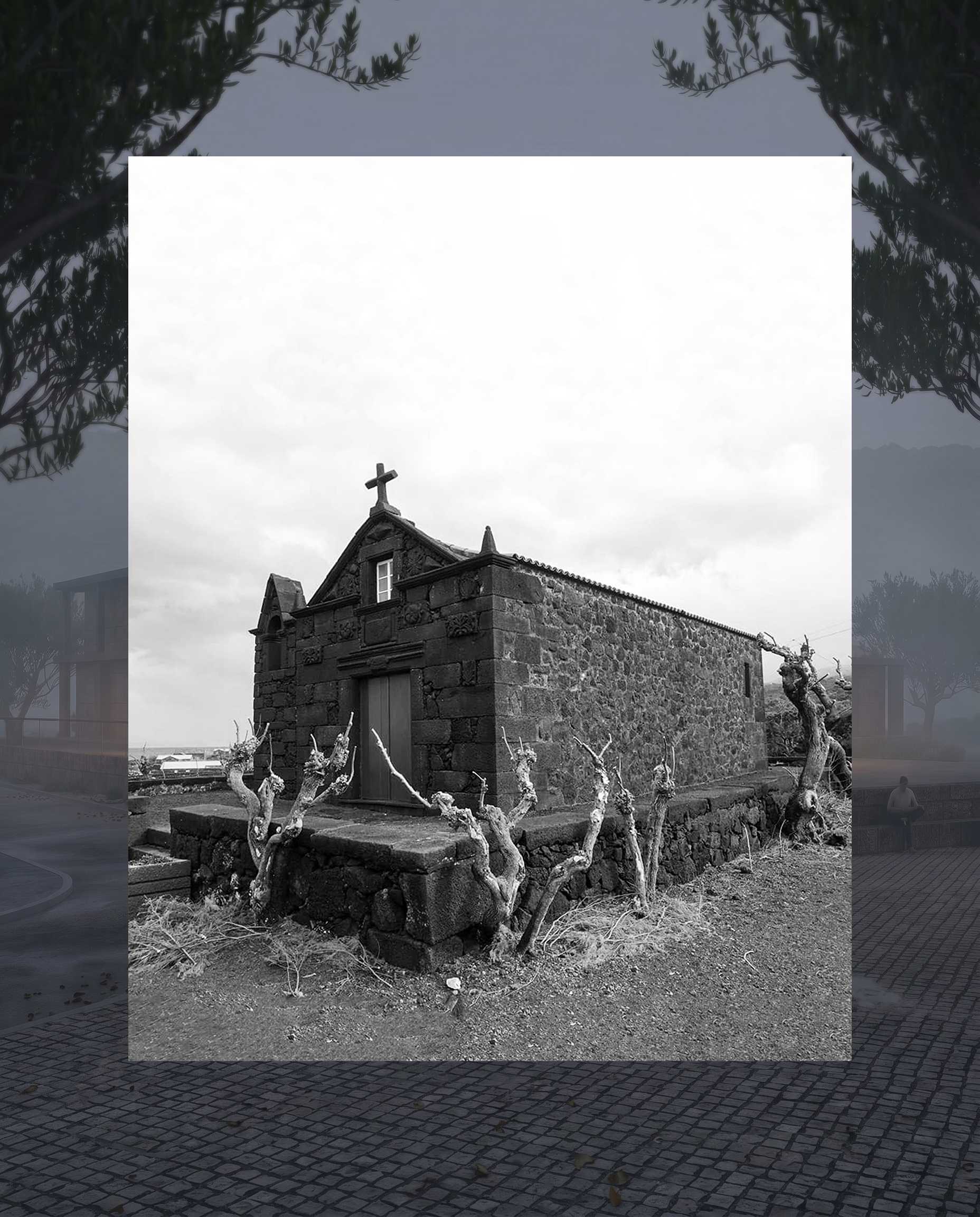
The proposal for the Multi-Purpose Center of Lajes do Pico is grounded in a clear premise: to build within a territory where the landscape is not a backdrop, but an active material of architecture. The town rests on a lava fajã, where ground, walls, and mineral mass define a grammar of density, roughness, and resistance. The project emerges directly from this condition, continuing the geological logic of the site through a construction that appears to rest naturally on the basalt platform.
Rather than an isolated object, the building organizes the site, mediates scales, and structures the program through a coherent system of volumes and voids. It assumes a dual commitment: to respond rigorously to functional demands while constructing a spatial identity rooted in the Azorean context, without resorting to literal references. The building is conceived as a mineral extension of the territory—compact, durable, and materially continuous with the volcanic landscape.
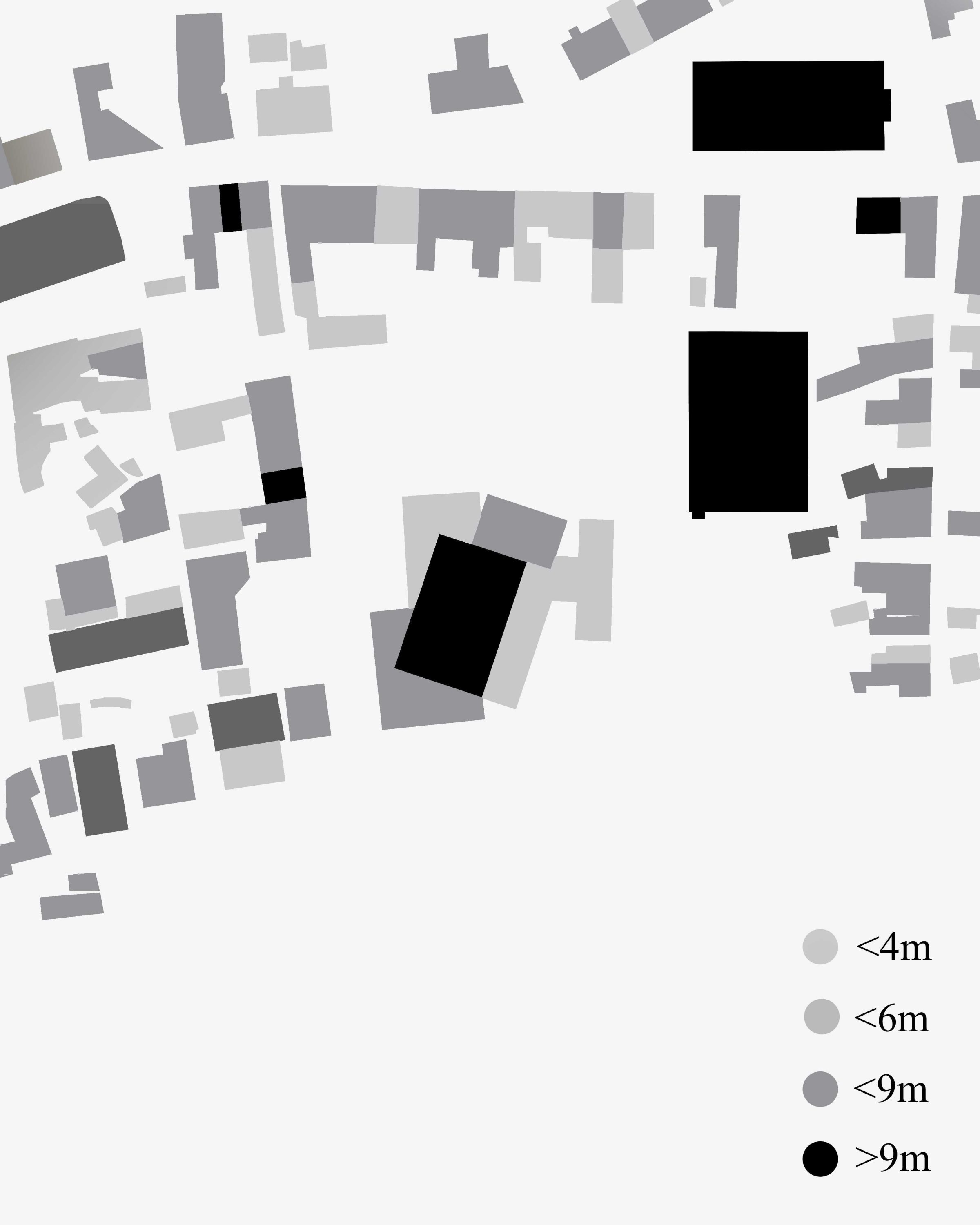
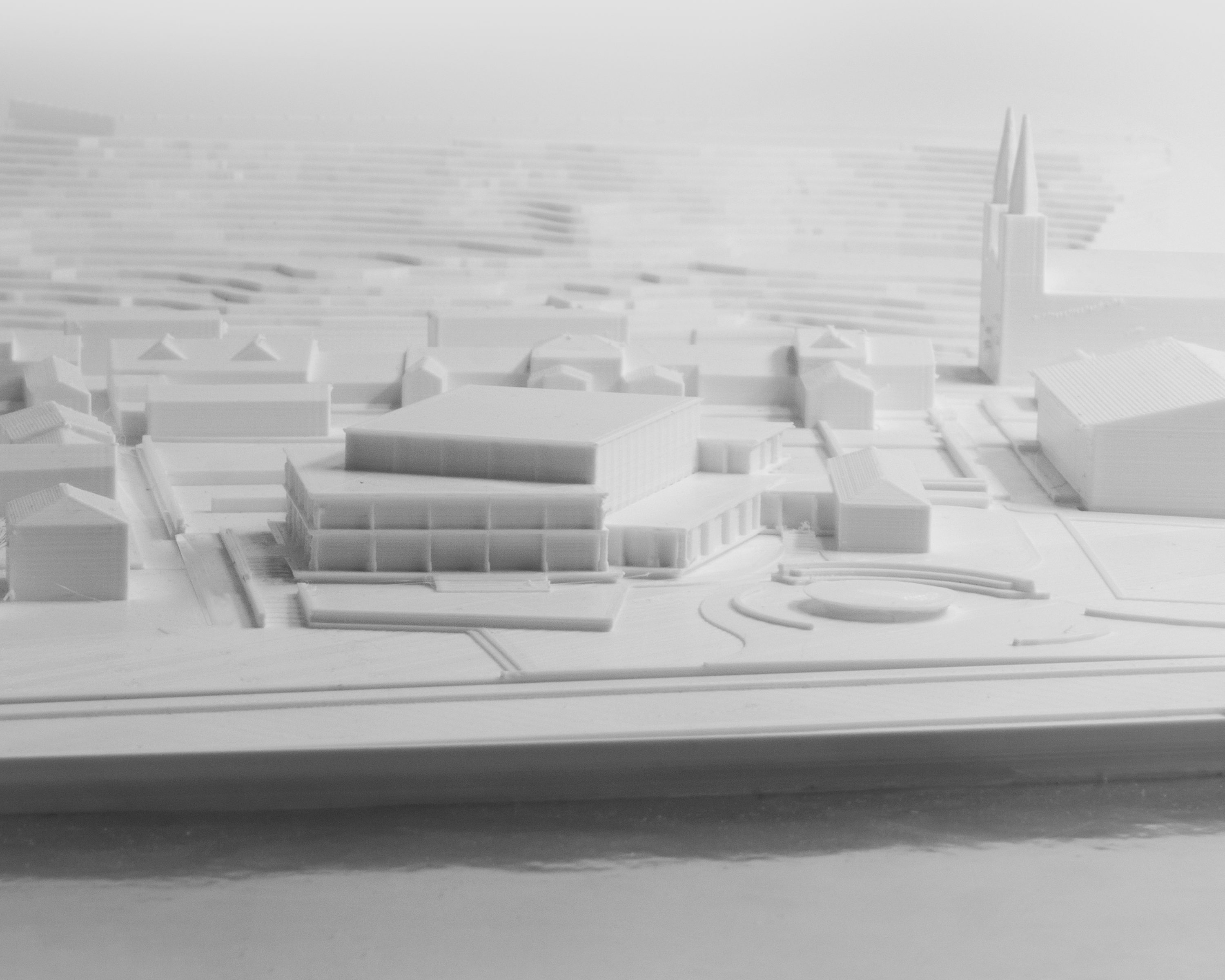
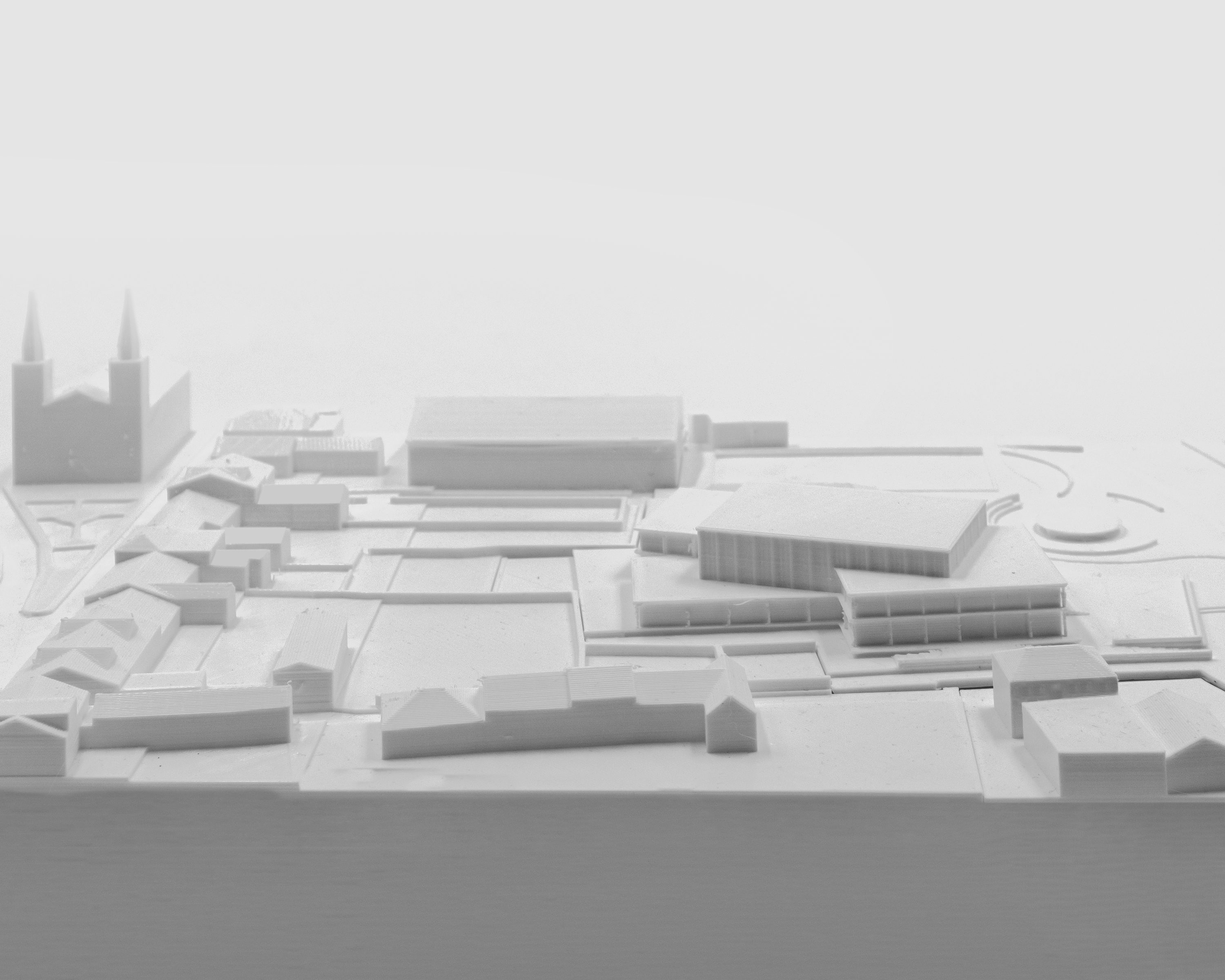
The intervention balances territorial and local scales. It establishes a civic presence while fragmenting into articulated volumes that reduce its perceived mass and allow a finer integration into the surroundings. The composition operates as an archipelago, connected through platforms, transitional spaces, and an elevated public square functioning as an agora—both an access point and a mediator between levels in response to the maritime context.
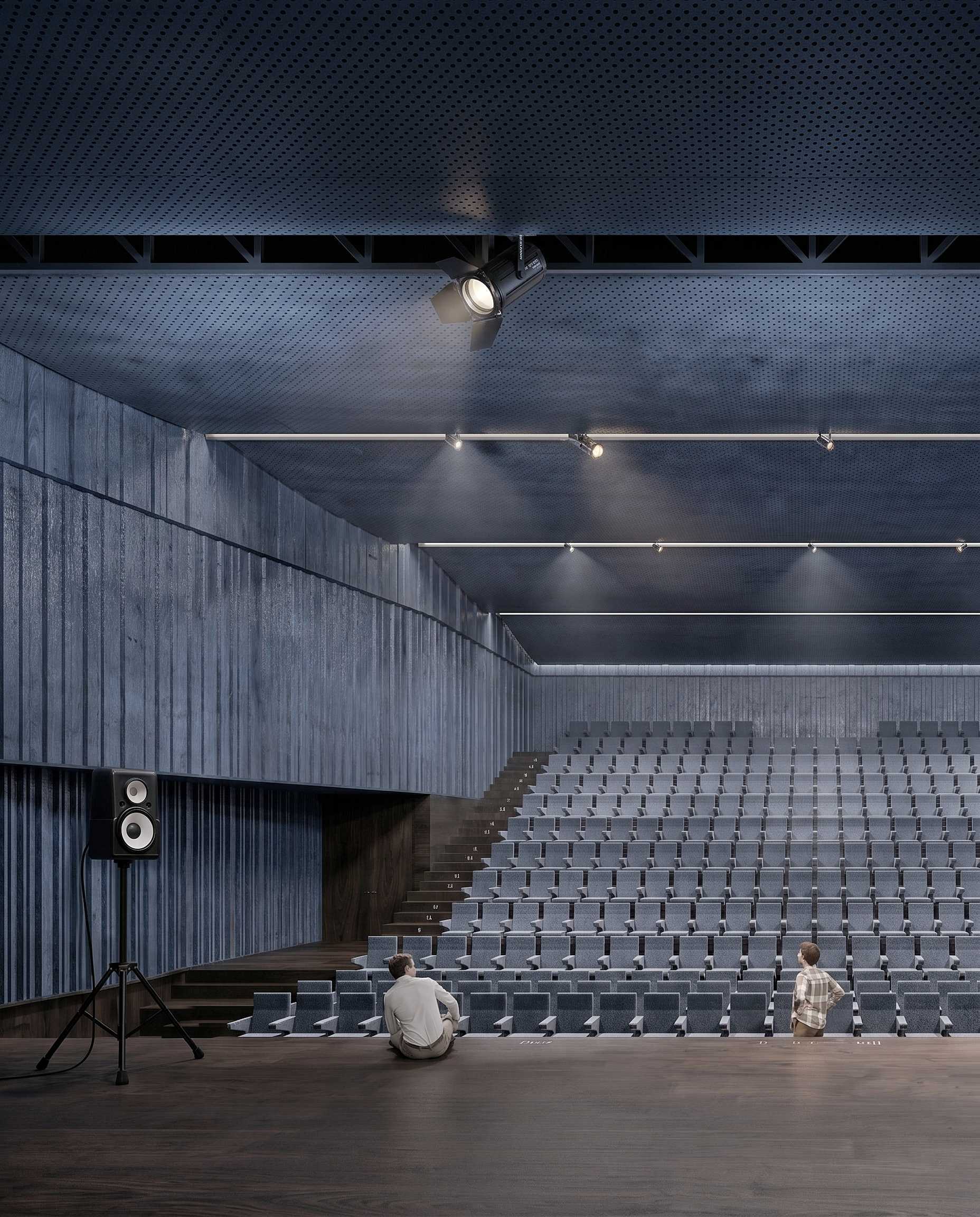
The project is organized as a single institution composed of four interconnected volumes: auditorium, atrium/library/museum, music school, and backstage. This decomposition clarifies the program while maintaining unity through a shared material and structural logic. The auditorium forms the dominant core, while the remaining volumes adapt in scale and proportion to their uses. This strategy ensures flexibility over time, allowing independent operation of different parts and supporting efficient use and maintenance.
The existing building is preserved and integrated, establishing continuity between past and present and reinforcing the project’s connection to the place. The atrium acts as the central civic space, linking all functions and supporting a range of uses—from foyer to informal gathering space—while extending toward the exterior.
Materially, the project relies on a restrained palette: concrete with volcanic aggregates, locally produced prefabricated basalt blocks, and steel trusses for large spans. This approach reinforces the relationship between construction and place, combining tectonic clarity with structural pragmatism. The façade system is non-structural and designed for seismic performance, while its mass contributes to acoustic control.
Sustainability is addressed through durability, low maintenance, and the use of local resources. The project prioritizes thermal inertia, simple construction systems, and the reuse of existing structures. In response to the insular climate, the building adopts a robust and resilient expression, where architectural quality emerges from precision, material coherence, and the capacity to age with dignity.
–
STATUS: Competition entry (2026).
TEAM un-icon: Joana Azevedo & Matteo Missaglia, Alessio Iacob
LOCATION: Lajes do Pico, Azores (PT)
ACOUSTIC CONSULTANT: Inacoustics
THEATER CONSULTANT: Blackfrog
MUSEOGRAPHY CONSULTANT: Cariatides Cultura
STRUCTURAL ENGINEER : Eleven Steps
MEP ENGINEER: PN10
LANDSCAPE: Atelier Baum